Thinking about advertising your home for rent but want to skip the hefty agent fees? You're in the right place. Choosing to sell or let your property without an agent doesn't just save you thousands; it puts you firmly in control. We'll walk you through exactly how to use a free platform like Noagent.Properties to connect directly with great tenants, making the process smooth, profitable, and surprisingly simple.
Your Guide to Renting Property Without an Agent
If you're a landlord in the UK right now, you're in a strong position. Tenant demand is sky-high, and there just aren't enough properties to go around. This is the perfect time to advertise your home for rent yourself. By cutting out the middleman, you avoid those eye-watering agent fees, deal directly with potential tenants, and manage the whole process on your own terms.
This guide is your roadmap. We’ll cover everything from getting your property tenant-ready and crafting a listing that stands out, all the way to signing the tenancy agreement, ensuring you keep more of your hard-earned money.
The Modern Landlord's Advantage
Let's be clear: the UK rental market has a serious supply shortage. At the start of 2026, the number of available rental homes was a staggering 23% below pre-pandemic levels, and that trend is keeping rental prices on the up.
What does this mean for you? A well-advertised property gets snapped up. Fast. For private landlords using a platform like Noagent Properties, it’s a golden opportunity to list for free and find quality tenants who are specifically looking to avoid agent-inflated costs. By listing for free, you avoid commission fees entirely.
The whole process is more straightforward than you might think. It really boils down to three simple stages.
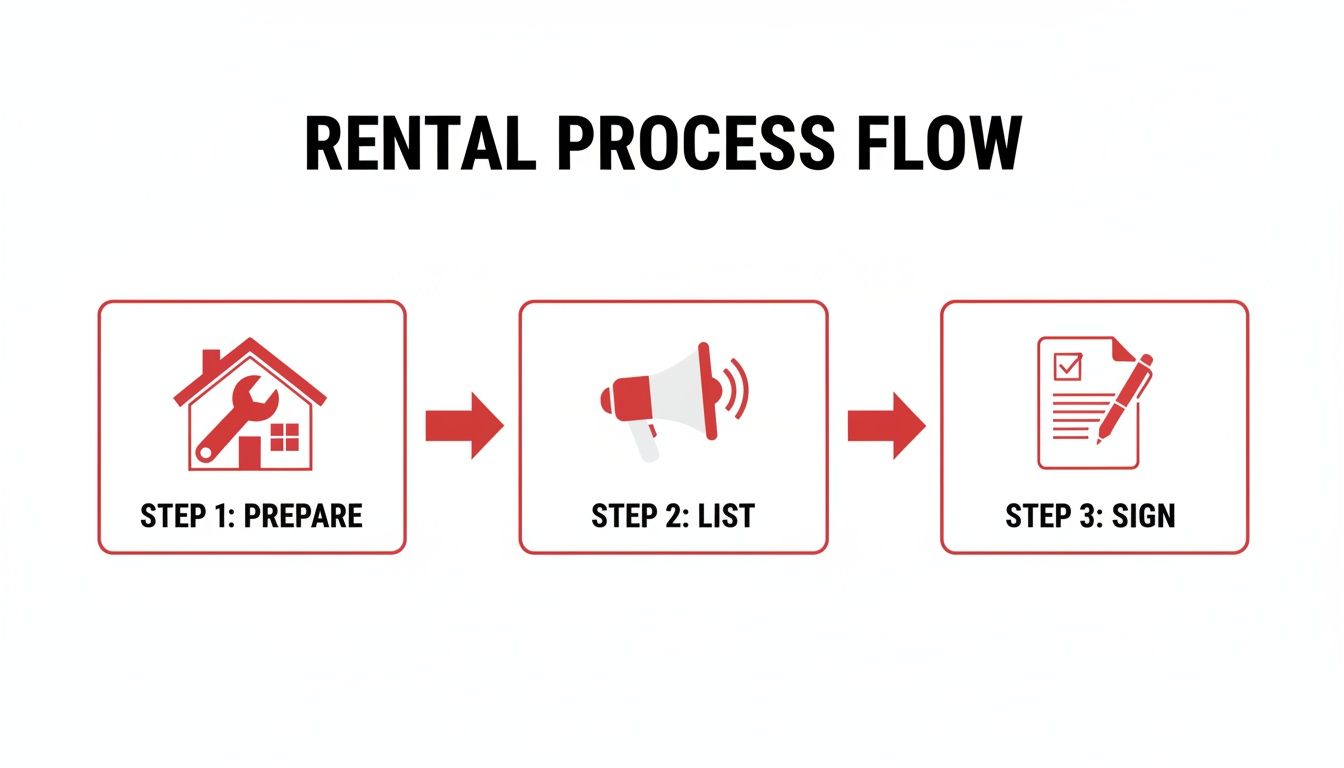
As you can see, it's just a case of preparing your property, getting it listed online for free, and then finalising the paperwork with your chosen tenant.
Why Go Agent-Free? The Cost Breakdown
The single biggest reason to manage your own rental? The savings. It's not just a few quid, either. Traditional letting agents typically charge a hefty percentage of your annual rent, which can easily run into thousands of pounds. When you sell without an agent, you save even more.
Let's put some numbers on that. Here’s a quick comparison based on a typical UK rental property generating £1,500 per month in rent.
Private Landlord vs Traditional Agent Cost Breakdown
| Service | Typical Agent Fee (12% of Annual Rent) | Private Landlord Cost (Using Noagent Properties) |
|---|---|---|
| Tenant Find & Listing Fee | £2,160 | £0 (Free Listing) |
| Rent Collection | Included in management fee | £0 (Direct to landlord) |
| Total Annual Cost | £2,160 | £0 |
The numbers speak for themselves. That saving of over £2,000 goes straight back into your pocket, year after year.
By advertising your property yourself on a free platform like Noagent.Properties, you completely eliminate commission fees. This means more rental income for you and the flexibility to offer a more competitive rent, making your property even more appealing to tenants.
Beyond the money, direct communication builds a much stronger landlord-tenant relationship from the get-go. You can answer questions honestly, arrange viewings that suit your schedule, and get a real feel for applicants yourself. This hands-on approach, like the one taken for this two-bedroom flat in Greenford with direct landlord inquiries, gives you the confidence that you're choosing the right person to live in your property.
Preparing Your Property and Setting the Right Rent
Before you even think about writing a single word for your rental ad, take a good, hard look at the property itself. First impressions are everything, and a scruffy flat or a house with niggling little problems is a massive turn-off for good tenants.
Think about it from their perspective. A dripping tap, scuffed walls, or a weed-filled front path doesn't just look bad; it screams that the landlord doesn't care. Getting these details right from the start not only justifies a better rent but attracts tenants who will treat your property with respect.
Getting Your Property Tenant-Ready
You don't just want it clean; you want it sparkling. A proper, professional-level deep clean is non-negotiable. Grab a detailed deep cleaning checklist and be thorough—we're talking skirting boards, inside cupboards, descaled showerheads, the works.
Beyond the deep clean, a few small jobs can make a world of difference:
- Tackle the small jobs: Fix that leaky tap, replace the cracked tile in the bathroom, and make sure every window and door lock works smoothly. It all adds up.
- A lick of paint goes a long way: A fresh coat of a neutral colour, like a soft grey or off-white, instantly makes a space feel brighter, bigger, and ready for someone to make their own.
- Don't forget kerb appeal: Tidy the front garden, give the front door a fresh coat of paint, and make sure the entryway is welcoming. This is the very first thing they'll see.
These touches aren't huge investments, but they signal quality and care. That's exactly what you want to communicate to responsible people looking for their next home.
Setting a Competitive Rental Price
Pricing your rental is a balancing act. Go too high, and you're looking at an empty property and zero income for weeks. Go too low, and you're literally leaving money on the table every single month.
The only way to get it right is with a bit of local research. Jump onto Noagent Properties and search for properties similar to yours in the same postcode. What are they listed for? Even more importantly, what have they recently been let for? That's your true market rate.
You can even analyse the competition, like this all-bills-included one-bedroom flat in London. See how they’ve positioned themselves to get an edge.
Your rental price should reflect not just the property itself, but also its location, condition, and included amenities. A property with a new kitchen or off-street parking can command a higher rent than a comparable one without.
Ensuring Legal Compliance Before You List
Before you even think about viewings, you need to get your legal ducks in a row. This is an absolute must-do to protect yourself and your tenants. In the UK, you are legally required to have these documents ready to go:
- An Energy Performance Certificate (EPC) with a minimum rating of ‘E’.
- A Gas Safety Certificate from a Gas Safe registered engineer for any property with gas appliances.
- An Electrical Installation Condition Report (EICR) proving the electrics are safe.
Having these sorted before you list shows you're a professional and keeps you on the right side of the law, avoiding hefty fines. With average private rents in England hitting £1,423 in January 2026, the market is strong. By handling the let yourself, you can price smartly and keep the full rental income instead of giving a cut to an agent. For more insight, you can read the full ONS report on private rental market trends to see how you can maximise your returns.
Creating a Rental Listing That Attracts Quality Tenants
Think of your online rental advert as your number one sales tool. It’s the first impression you make, and it’s what will convince a great tenant to click ‘enquire’ on your property instead of the hundred others available. A good listing doesn’t just show off a space; it sells a lifestyle, answers questions before they’re asked, and builds trust from the get-go.
The trick is to put yourself in a renter’s shoes. What would you want to know? What details would make you feel confident about a property? Getting this right now will save you countless hours answering basic questions later and means the enquiries you do get will be from people who are genuinely interested.

Crafting a Compelling Headline and Description
Your headline is the first thing anyone will read. It needs to be sharp, clear, and packed with the most important details. Forget vague titles like "Flat for Rent" – you need to get specific to stand out.
A powerful headline should always include:
- The number of bedrooms (e.g., "Spacious 2-Bed")
- The property type (e.g., "Terraced House")
- A killer selling point (e.g., "with Private Garden")
- The location (e.g., "in Clapham")
So, a really strong headline looks something like this: "Spacious 2-Bed Terraced House with Private Garden in Clapham". A renter knows instantly if it matches their basic search.
When you get to the description, don’t just list the rooms. Tell a story. Talk about the morning sun flooding the kitchen, the quiet cul-de-sac it's on, or the five-minute walk to the tube. Help tenants imagine themselves living there. It’s also crucial to be upfront about the deposit, council tax band, and whether bills are included. Transparency filters out unsuitable applicants from the start. If you want to explore different tenancy options, you can find out more about zero deposit and fee-free renting here.
The Power of High-Quality Visuals
In the world of online property listings, your photos do all the talking. Grainy, dark, or cluttered pictures are an immediate red flag for renters. You don’t need to be a pro, but a little effort here goes a very long way.
Great visuals are key, and learning a few Real Estate Photography Techniques can make your listing pop. Tidy up, open the curtains to let natural light pour in, and take your shots from the corners of rooms to make them feel as big and open as possible.
A floor plan isn't just a "nice-to-have" anymore – it's an essential part of a serious rental listing. It gives tenants a clear map of the layout and flow, answering those critical questions about room sizes and how they connect before a viewing is even booked.
Platforms like Noagent Properties make it simple to upload a whole gallery of high-resolution photos and a floor plan directly to your free listing. These visuals are what will keep a potential tenant glued to your advert and get them to book a viewing. By cutting out agent fees, you can afford to spend a small amount on professional photos or a floor plan and still end up thousands of pounds better off.
Recent market data shows that while UK rent growth hit 2% year-on-year by December 2025, monthly rents actually saw a slight dip, signalling a seasonal slowdown. For landlords using a free platform like Noagent Properties, this is the perfect time for strategic advertising. A standout, cost-free listing can capture tenant interest quickly, reducing expensive void periods without paying agent commissions. You can discover more insights about the 2026 rental market shift and how to use it to your advantage.
How to Manage Viewings and Screen Tenants Effectively
Your rental advert is live, and the enquiries are starting to hit your inbox. Fantastic! Now comes the most important part: sorting through the interest to find the right person for your property.
This is where being your own agent really pays off. You get to meet the applicants yourself, get a real feel for who they are, and cut out the costly middleman. It’s your chance to show off your property and ask the questions that matter, making sure you find someone who’ll treat it like a home.

Organising Viewings That Work for You
So, what’s the best way to handle viewings? You’ve got two main options: one-on-one appointments or a single ‘open house’ day.
Individual viewings are great for giving each potential tenant your full attention. You can answer their questions properly and really get to know them. But if you're short on time, an open house can be a game-changer. By scheduling everyone into a one or two-hour slot, you not only save time but also create a little buzz and healthy competition.
Whichever you choose, a quick confirmation message the day before can work wonders for cutting down on no-shows.
Conducting Thorough and Fair Tenant Screening
A good gut feeling is great, but it’s no substitute for proper checks. A consistent, fair screening process is your best defence against future problems, and it ensures you treat every applicant equally.
For every serious applicant, there are three steps you absolutely can't skip:
- Right to Rent Checks: This isn't optional—it's the law. You must check that every adult moving in has the legal right to rent in the UK before the tenancy begins.
- Solid References: Always get references from their current employer and their last landlord. This gives you a clear picture of their financial reliability and their track record as a tenant.
- A Full Credit Check: This will flag any financial red flags you need to know about, like County Court Judgements (CCJs), before you hand over the keys.
My best piece of advice? Be upfront about your screening process from the very start. Let applicants know what checks you’ll be running. It builds trust and helps weed out anyone who isn’t serious or has something to hide.
This structured approach lets you choose your next tenant with confidence. To get a better sense of what they're looking for, it can be helpful to review some important information for renters before they inquire.
By managing all this through a platform like Noagent Properties, you stay in direct control and keep the money an agent would charge for these exact same services.
Finalizing the Tenancy and Ensuring Legal Compliance
You’ve found the perfect tenant. Great! Now for the final, and most critical, part: making it all official and legally watertight. This is the stage where you dot the i's and cross the t's, all while saving yourself a hefty sum in agent fees for what is essentially paperwork.
Getting these next steps right from the outset protects both you and your tenant, paving the way for a smooth, hassle-free tenancy.
The absolute foundation of any rental is the tenancy agreement. In the UK, this will almost always be an Assured Shorthold Tenancy (AST). It’s tempting to download a generic template from the internet, but this is a classic mistake. Use a reputable, up-to-date version that clearly lays out everyone's responsibilities.
This document is your best friend. It needs to be crystal clear on:
- The full names of every tenant and the landlord.
- The property address, rent amount, and when it’s due.
- The deposit amount and which protection scheme you’ll be using.
- The tenancy start and end dates.
- Both tenant and landlord obligations (like who handles which repairs).
Securing the Deposit and Creating an Inventory
Once the agreement is signed, you’ll collect the security deposit. Now, the clock starts ticking. You are legally required to protect this deposit in one of the three government-approved tenancy deposit schemes within 30 days of receiving the money.
You also have to give the tenant the ‘prescribed information’—basically, the official details about where their deposit is being held.
Don't cut corners here. Failing to protect a deposit correctly can result in you paying your tenant up to 3x the deposit amount in compensation, and it can seriously complicate things if you ever need to regain possession of your property. This is a non-negotiable legal step.
Alongside the deposit, a detailed inventory report is your secret weapon against end-of-tenancy disputes. This isn't just a quick list of furniture; it's a forensic record of the property's exact condition before your tenant moves their first box in.
Walk through every room, noting the condition of the walls, floors, fixtures, and any furnishings. The real game-changer? Take dated photos and videos of absolutely everything. This creates an undeniable record that protects you both from any "he said, she said" arguments down the line. By managing this yourself, you're avoiding hundreds in agent fees for a simple administrative task.
If you're managing more complex properties, like a licensed HMO, meticulous record-keeping is even more crucial. You can see how experienced landlords keep their documentation organised by looking at examples like this licensed HMO near the university.
By nailing these final compliance steps when you advertise home for rent, you kick things off on the right foot with a professional, transparent relationship.
Your Top Questions About Renting Out Your Home, Answered
Going it alone and deciding to rent out your property without an agent is a big move, but it's one that puts you firmly in control. If you're new to the process, it’s completely normal to have a few questions. We've been there.
Here are the straightforward answers to the most common things landlords ask us.

How Much Money Will I Actually Save?
This is the big one. Traditional letting agents typically charge anywhere from 8% to 15% of your annual rent.
Let’s put that into perspective. For a property rented at £1,400 per month, you’d be handing over between £1,344 and £2,520 every single year. By using a free platform like Noagent Properties to advertise your home for rent, you pocket that entire amount. No management fees, no tenant-finding charges, and no renewal costs. Just more of your own money in your bank account.
What Legal Paperwork Do I Absolutely Need?
Before a single viewing happens, getting your legal documents in order is crucial. This isn’t just good practice; it's the law in the UK, and it protects both you and your future tenant.
You can't legally rent out your property without these:
- A valid Energy Performance Certificate (EPC) with at least an 'E' rating.
- A current Gas Safety Certificate, if your property has gas appliances.
- An Electrical Installation Condition Report (EICR), confirming your electrics are safe.
Don't forget, you must also carry out a ‘Right to Rent’ check on any adult who will be living in the property before their tenancy officially starts.
Is it harder to find good tenants without an agent? Honestly, no. A great advert on a busy platform puts your property in front of a huge pool of renters. The best part? You handle the enquiries yourself, giving you a gut feeling for applicants right from the start. It’s the first step to building a positive landlord-tenant relationship.
With a simple screening process in place—including proper referencing and the required Right to Rent checks—you can confidently pick a reliable tenant yourself.
Ready to find your next great tenant and skip the fees? Get your property listed for free on Noagent Properties and start connecting directly with thousands of renters today. Head over to https://www.noagent.properties to get started.
Leave a Reply
You must be logged in to post a comment.